


Is Digital Smile Designing Safe? What Patients Should Know
You might be thinking this already.
“Digital Smile Designing sounds high-tech… does that mean lasers, radiation, or something invasive?”
Or maybe, “Is my face being scanned in a way that could be harmful?”
These are very common thoughts , especially when you hear words like digital, designing, and technology in the same sentence. Many people assume that digital smile designing in Gangapur Road Nashik involves heavy machinery, risky exposure, or experimental methods.
But here’s the myth-busting truth:
Digital Smile Designing (DSD) is not about harming your teeth or face with advanced tools. It’s actually about reducing guesswork, avoiding unnecessary procedures, and making treatments safer and more predictable.
Let’s calmly walk through what it really is, how safe it is, and what you should genuinely know before considering it.
What Is Digital Smile Designing (DSD), Really?
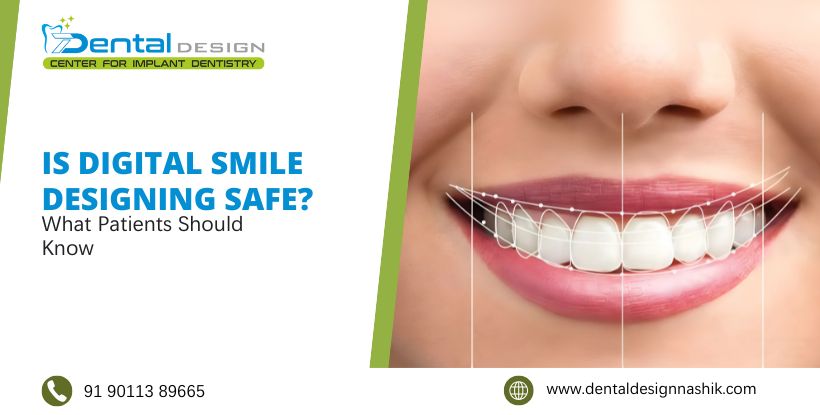
Digital Smile Designing is a planning and visualization process, not a treatment by itself.
In simple words, it helps us see your future smile before we touch your teeth.
Using photographs, videos, and digital scans, we analyze:
- Your teeth
- Your gums
- Your lips
- Your facial proportions
- Your smile dynamics when you talk or laugh
All this information is then used to digitally design a smile that suits your face, not a generic “perfect smile”.
Instead of relying only on imagination or verbal explanations, DSD allows both the dentist and you to be on the same page from the start.
At Dental Design Center, Nashik, this process is used to improve clarity, comfort, and confidence before starting any cosmetic dental work.
Why People Worry About Safety (And Why That’s Fair)
When people hear about digital smile designing treatment, the concerns usually fall into three buckets:
- Is there radiation involved?
- Is it invasive?
- Can technology go wrong?
These are valid questions. Dental treatments should never feel like blind trust situations.
The good part?
DSD was created to increase safety, not compromise it.
How Is Digital Smile Designing Safe?
1. It’s Mostly Non-Invasive
Digital Smile Designing involves:
- Facial photographs
- Smile videos
- Intraoral scans or impressions
There’s no cutting, drilling, or altering involved during the design phase. We’re observing, analyzing, and planning , not treating yet.
2. Minimal to No Radiation Use
In many cases, DSD relies purely on:
- Photographs
- Digital scans
- Software simulations
If X-rays or scans are required, they are the same standard diagnostic tools already used in routine dentistry, following strict safety guidelines.
3. It Reduces Trial-and-Error
One of the biggest safety advantages of digital smile designing in Nashik is that it reduces unnecessary adjustments later.
Because the final outcome is planned digitally:
- Fewer surprises during treatment
- Less need for repeated corrections
- Better control over tooth reduction and gum handling
That predictability is what makes the process safer overall.
Technological Components of Digital Smile Designing
Let’s break this down without turning it into a tech lecture.
Digital Photography & Video Analysis
High-quality photos and videos help study:
- Smile width
- Lip movement
- Tooth visibility while speaking
This ensures the smile looks good not just in photos, but in real life.
Intraoral Scanners
Instead of uncomfortable impressions, scanners capture a precise 3D image of your teeth and gums. It’s quicker, cleaner, and more accurate.
Smile Design Software
Specialized software is used to:
- Design tooth shapes
- Adjust proportions
- Match facial symmetry
This is where the “designing” actually happens.
Digital Mock-Ups
In some cases, a temporary mock-up can be created to show how the smile may look in your mouth before final treatment begins.
All these components work together to support accuracy and safety, not replace clinical judgment.
How DSD Makes the Entire Treatment Process Smoother
This is where patients really feel the difference.
Better Communication
Instead of imagining outcomes, you can see them. That reduces anxiety and builds trust.
Clear Treatment Direction
Once the design is finalized, every step that follows, veneers, crowns, aligners, or teeth whitening, follows a clear plan.
Fewer Mid-Treatment Changes
Since expectations are aligned early, there’s less back-and-forth later.
More Conservative Dentistry
Because everything is planned digitally, we often end up preserving more natural tooth structure.
Pro Tip:
If a clinic explains your smile plan visually instead of only verbally, you’re already in safer territory.
Is Digital Smile Designing Only for Cosmetic Cases?
Nope, not at all.
While it’s popular for smile makeovers, digital smile designing treatment is also useful for:
- Full mouth rehabilitation
- Braces planning
- Veneers and crowns
- Complex restorative cases
Any treatment where appearance and function must work together benefits from DSD.
A lot of dental fear comes from not knowing what will happen next.
Digital Smile Designing removes that uncertainty. It replaces vague promises with clear previews and structured planning. Safety, in dentistry, is not just about tools; it’s about transparency.
And that’s where DSD quietly does its best work.
FAQs
1. Is digital smile designing in Gangapur Road Nashik safe for everyone?
Yes, when used appropriately. Since DSD is primarily a planning tool, it’s safe for most people considering cosmetic or restorative dental procedures. The dentist evaluates oral health first to decide if DSD is suitable for your specific case.
2. Does digital smile designing treatment damage natural teeth?
No. The design phase does not involve altering your teeth. Any actual treatment is discussed separately and planned conservatively. In fact, DSD often helps reduce unnecessary tooth trimming.
3. Can digital smile designing results look unnatural?
No, the planning is done thoughtfully, DSD focuses on facial harmony and natural proportions. The goal is improvement, not exaggeration.
4. Is digital smile designing in Nashik only for young people?
Not at all. Smile design is about facial balance, not age. People of different age groups choose DSD to improve confidence, function, and comfort.
5. How long does the digital smile designing process take?
The design phase usually takes a few appointments, depending on complexity. The advantage is that time spent planning often saves time during actual treatment.
Thinking About Your Smile? Let’s Talk
If you’ve been curious but cautious about digital smile designing in Gangapur Road Nashik, that’s completely normal. The best next step isn’t rushing into treatment; it’s having a clear conversation.
At Dental Design Center, Nashik, we believe safety starts with understanding. You’re welcome to visit, ask questions, and explore whether digital smile designing treatment fits your needs, calmly, comfortably, and at your own pace.
Your smile deserves clarity, not confusion.